 Kreate Club
← All posts · June 29, 2026 · 3 min read
Creator Burnout Is a Workflow Problem, Not a Passion Problem
The numbers on creator burnout are genuinely bleak. Depending on the study, between 62% and 90% of creators report experiencing it. 71% have considered quitting entirely. 81% of full-time creators work more than 50 hours a week, weekends included.
The standard response to these numbers is wellness advice: take breaks, set boundaries, remember why you started. All fine. None of it addresses the actual mechanism, which is why creators come back from every break to the same grind and burn out again.
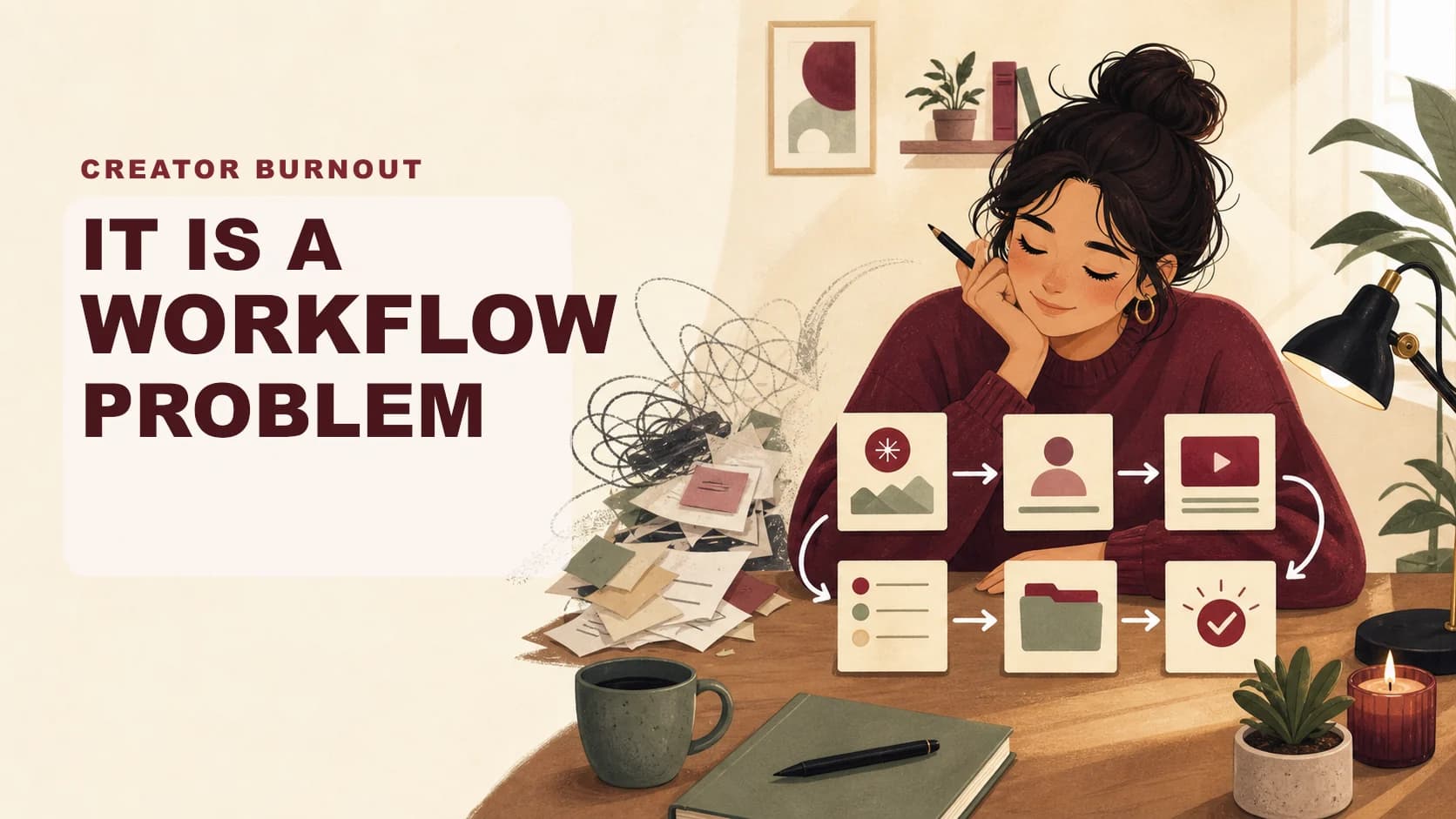
Here's the reframe: most creator burnout is workflow debt wearing an emotional costume.
The visible job vs the invisible job
Ask a non-creator what a short-form creator does and they'll describe the visible job: filming, editing, posting. Maybe 40% of the hours.
The other 60% is the invisible job: finding ideas, researching what's working, writing scripts, rewriting scripts that sound wrong, managing the mental tab of "what am I posting Thursday?" This is the part creators do at 11pm, unpaid by any view count, and it's where the burnout data actually points. The single most-cited burnout driver, named by over half of creators, isn't editing or hate comments. It's "constantly having to come up with new ideas."
Passion doesn't run out from making videos. It runs out from the seventh consecutive Sunday night staring at a blank doc.
Why "post less" is incomplete advice
The wellness answer to overload is volume reduction. Sometimes that's right. But short-form is a frequency game, and creators know it, which is why "just post less" advice mostly produces guilt instead of rest.
The alternative nobody suggests: keep the output, industrialize the invisible job. Factories didn't reduce burnout by making fewer things; they did it by stopping the practice of hand-forging every unit from scratch.
What industrializing actually looks like
Three changes, each targeting a named burnout driver:
1. Never ideate from zero. The blank page is the most expensive object in your workflow. Replace it with a weekly research sweep: collect outlier videos from your niche, remix each through 4 or 5 angles, bank everything. Ideation stops being a daily creative miracle and becomes a 45-minute Monday routine. (The one-video-into-five-scripts method is the deep-dive version.)
2. Batch the invisible work. Scripting seven videos in one sitting costs far less than seven separate sittings, because the expensive part is loading context into your head, not the writing. Same for research and same for filming. One creator-brain rule: never do a task the day it's due.
3. Make your tools carry the memory. A huge share of the invisible job is re-establishing context: re-finding that reference video, re-explaining your voice to ChatGPT, re-remembering what worked. Any system that persists your research, your sources, and your voice between sessions (a Notion database, a canvas tool like Kreate Club, whatever you'll actually maintain) converts recurring costs into one-time costs. That's the entire economic argument for creator tooling in one sentence.
The test
Here's a diagnostic that's more useful than any burnout quiz. Write down the last three times content work made you feel dread. Not tired, dread.
For most creators, all three will be invisible-job moments: no idea for tomorrow, a script that won't come together, research that ate a whole evening. If that's you, you don't primarily have a passion problem, a niche problem, or an algorithm problem. You have a workflow that makes every video artisanally, from scratch, forever, and it's costing you the exact hours the burnout studies keep counting.
Rest treats the symptom. The system treats the cause. Build the system, then take the break anyway; you'll finally be able to.
Sources: burnout prevalence and drivers via The Creator Economy, SaaS Ultra's 2026 burnout analysis, and InfluenceFlow's sustainability guide.
Try Kreate Club free for 7 days
Drop videos, notes, and voice memos on one canvas. Get hook-first scripts in your voice. $29/month after the trial, cancel anytime.
Start free trial